
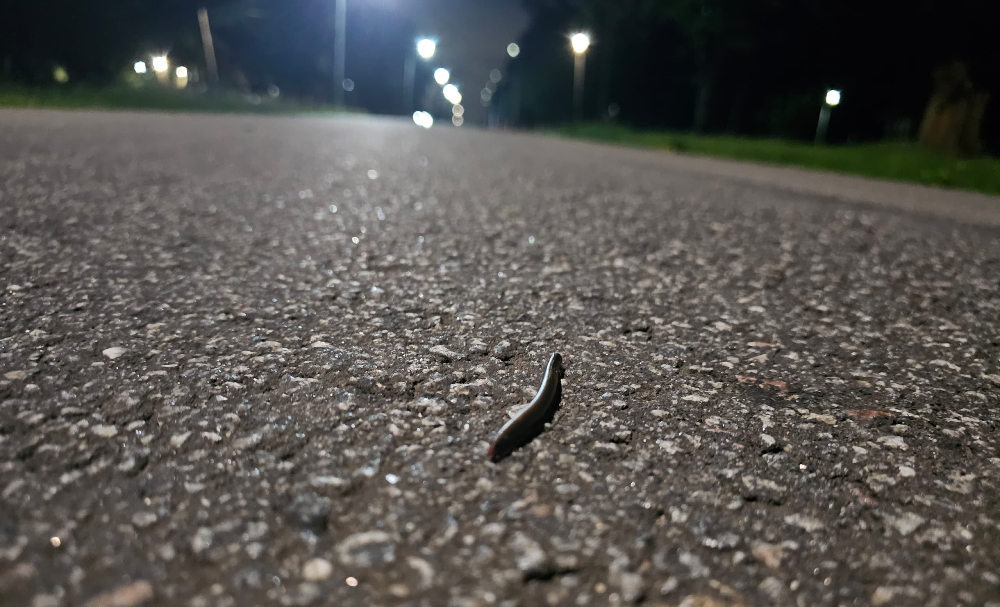
Before the campus stirs into its familiar rush, the roads belong briefly to something slower.
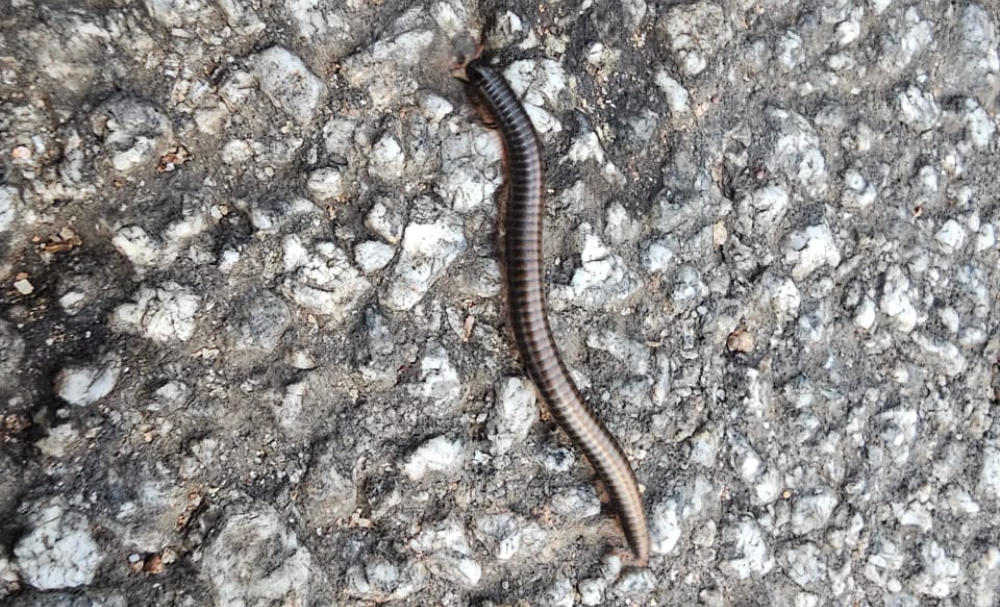
Across the tarred stretches, about three-inch crawlers, mostly juveniles of the Giant African millipede, make their crossing.
In fact, they are finishing the night’s work just as humans begin to reclaim the space.
As nocturnal creatures, their timing is precise. Dawn offers a narrow window: cool and relatively safe.
A little later, the risks multiply: tyres, trainers of fitness enthusiasts, and hungry birds all enter the equation. So they move before the campus fully wakes.
What they’re doing (and why it matters)
Millipedes are not hunters. They are recyclers.
They feed on decaying plant matter: rotting wood, fallen leaves, fungi, even animal waste. In doing so, they perform one of the campus ecosystem’s most important but invisible functions: nutrient cycling. What they break down returns to the soil, enriching it for new plant life.
Their habits reflect this role. They are typically nocturnal or crepuscular, avoiding the heat and dryness of the day. After rainfall, when humidity rises and the ground softens, they become especially active, often crossing roads to reach new feeding grounds or more suitable microhabitats.
Even the road itself plays a part. In the cooler hours, its surface can retain just enough warmth to aid movement, making it a convenient.
Built for survival
Though the ones commonly seen on campus measure only a few inches. suggesting they are juveniles, adults of the species can grow impressively long, reaching up to 13–15 inches.
Their defence strategy is simple but effective. When threatened, they coil into a tight spiral, protecting their softer underside. If that is not enough, they can release a pungent chemical from pores along their exoskeleton, a deterrent to predators. It may cause mild irritation, but they are generally harmless to humans.
And yes, the legs are many, often between 300 and 400. moving in coordinated waves that give them their steady, almost mechanical glide.
They are easy to miss, but their presence is crucial in maintaining a living campus.
And perhaps the simplest courtesy is this, to notice them, and to pass as carefully as they do.
| Story: Emmanuel Kwasi Debrah |


